In Pursuit of Sleep: A Comparative Guide to Mattress Technologies

Sleep is rarely a solitary sensation. It is a negotiation among materials, technologies, and the bodies that rest upon them. The domain innerspring-mattress.com invites us to parse that negotiation with rigor: to understand how innerspring systems, memory foams, latex layers, hybrids, and other sleep technologies fare across comfort, durability, temperature regulation, and long-term value. This feature-length overview adopts a non-commercial, educational stance, pairing lucid explanations with data-driven comparisons and a few portraits of the minds and crafts behind better beds.


Innerspring: The Traditional Core

The innerspring mattress stands as a monument to industrial craft. It is not merely coils and springs; it is an architecture of support. The classic design relies on a network of steel coils—unnamed, counted, calibrated—that bear the weight of the sleeper and distribute it across a grid of springs. The tension between coil count, gauge, and the arrangement of the coil system shapes felt support and alignment. In a landscape crowded with newer textures and foams, the innerspring remains a tactile reference point: resilient, breathable, and often refreshingly familiar to those who prize a springy bounce.

In modern iterations, the coil core is rarely a single, monolithic thing. It is a symphony of components: individually wrapped coils, edge guards, and comfort layers—pocketed insulators, quilted fabrics, moisture-wicking foams—that sculpt motion isolation and temperature flow. A well-made innerspring mattress can offer robust structural integrity for years, with the coil system acting as the backbone while comfort layers tailor contour and pressure relief.

For readers seeking a framework to compare materials, innerspring is best understood by three axes: the coil system (count, gauge, pocketing), the comfort stack (top layers like latex, memory foam, or wool), and the edge structure (how the perimeter holds its shape under load). When we elevate this analysis to a consumer decision, the questions become practical: Do you sleep hot or cool? Do you share a bed and want motion isolation? Are you seeking a certain firmness profile or a luxurious plush feel?

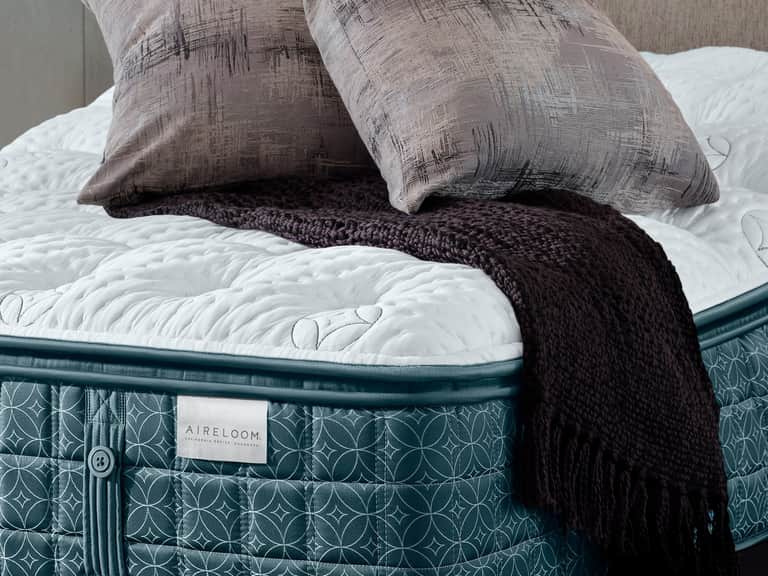
A notable modern exemplar of the tradition is the Aireloom Luxetop M2 Plush, a luxury innerspring that blends a plush top with a sophisticated coil system and natural materials. Its design emphasizes airflow, pressure relief, and edge stability—an exemplar of how premium components can coexist within a timeless technology.
A Panorama: Technologies in Conversation

The mattress market often frames products as standalone experiences, but the real value emerges when we compare across technologies. A well-structured comparison highlights how innerspring fares against memory foam, latex, hybrids, and other systems across critical dimensions: support and alignment, durability, temperature management, and maintenance needs. The goals of this article are deliberately non-commercial: to illuminate, not to sell; to disclose, not to persuade.

Consider a decision tree that begins with body type and sleeping position. Back sleepers may seek stable support with consistent spinal alignment; side sleepers tend to prioritize pressure relief at hips and shoulders; stomach sleepers require careful support to avoid midsection sag. Temperature sensitivity adds another layer of complexity: memory foam, while superb at contouring, has historically been associated with heat retention, whereas latex and hybrid constructions often improve airflow. In this guide, we offer a structured language to discuss these factors with clarity.


Memory Foam: Contour and Quietude

Memory foam introduces a different philosophy of comfort: a viscoelastic material that responds to heat and pressure by softening and molding to the body. This intimate conformity can reduce motion transfer and provide targeted relief for pressure points. Yet memory foam trade-offs include potential heat retention and slower recovery after movement. The material’s performance hinges on its formulation: density, open-cell structures, and any additives meant to modulate breathability.

In a comparison with innerspring, memory foam’s primary strength is contour and isolation; its potential weakness—temperature—can be mitigated with breathable covers, phase-change materials, or hybrid configurations that introduce coils and air channels.

Latex: Natural Breathability and Resilience

Latex brings natural elasticity, buoyant support, and aeration. All-natural latex, often embedded in quilted or layered formats, can offer durable comfort with a responsive feel. The cross-section of latex, wool, and silk blends can yield a cooler sleep surface. While the latex layer is generally less prone to the “hug” effect associated with some memory foams, the overall experience depends on the thickness and density of the latex, as well as the surrounding comfort layers.

When placed alongside innerspring, latex often appears in hybrid configurations: coils providing bounce and airflow, with latex layers offering consistent pressure distribution and a cooler surface. The result can be a balanced fusion of support and cooling, a middle path that appeals to sleepers seeking both efficiency and ease.

Hybrid and Variants: The Best of Both Worlds

Hybrid mattresses pair innerspring cores with foam, latex, or other comfort layers. The guiding intuition is straightforward: external layers tune contour and pressure relief, while the coil core ensures robust support, durability, and airflow. Hybrids aim to harmonize the strengths of two families, offering a versatile experience that appeals to a broad audience.

The Aireloom Luxetop M2 Plush, for instance, demonstrates how a high-end hybrid approach can converge hand-tufted craftsmanship, natural materials, and advanced coil systems. The outcome is a plush experience that does not sacrifice edge support or spinal alignment.

Care, Longevity, and the Economics of Sleep

Longevity in a mattress is a conversation about materials, construction quality, and routine care. Even the finest coil systems benefit from appropriate rotation, support, and ventilation. Maintenance does not always mean expensive interventions; it can mean simple routines—rotating every three months, using a breathable protector, and ensuring the base is stable and flat. The economics of sleep often hinge on durability: a more resilient mattress may demand a higher upfront price but return value over many years.

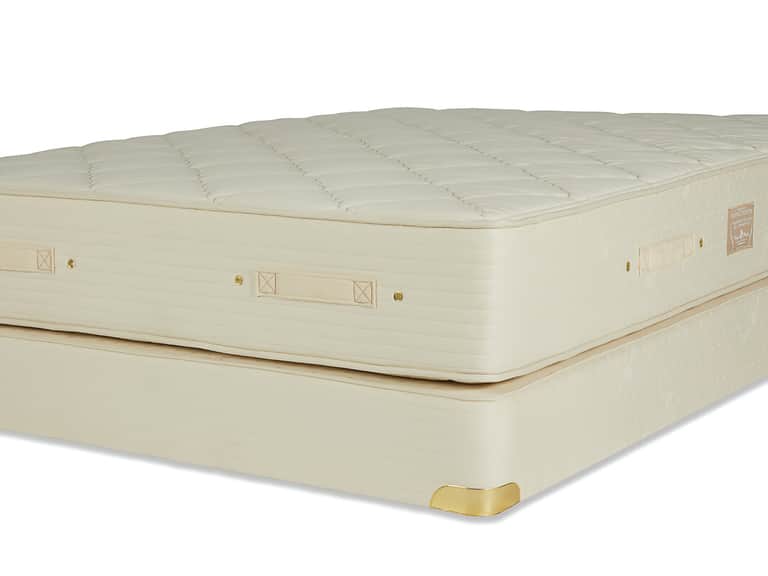
In this light, a mortgage on sleep becomes a measured investment in health and routine. A product such as the Royal-Pedic Premier Natural Latex Quilt-top Mattress represents a premium approach to longevity—dense natural latex, wool layers, and a robust foundation balance plush comfort with lasting support. The care plan for such a mattress includes attentive rotation and mindful protection from moisture and wear.


Three Key Pioneers in Mattress Technology

If sleep is a language, its most influential words have been spoken by minds from different epochs: design visionaries who imagined comfort as a blend of structure, material science, and human physiology. Here are three figures from distinct eras whose ideas reverberate in today’s bedding:

  • Early 20th Century: The Industrial Artisan
    In the era when factories began to translate sleep into standard products, artisans and engineers refined coil patterns, edge support, and quilted covers. Their work established the blueprint for the coil-based backbone that still anchors innerspring mattresses today. Their legacy persists in the kinds of coil counts, gauge calibrations, and pocketed designs that modern manufacturers optimize for comfort and durability.
  • Mid-20th Century: The Materials Innovator
    As foam and latex technologies began to mature, researchers started layering foam with coil cores to address heat, contour, and motion. This era bred hybrids in embryonic forms—mattresses that borrowed a memory of plushness from foam while preserving the bounce of springs. The convergence of materials science with ergonomic study produced a new generation of sleep surfaces designed to align with the spine’s natural curvature.
  • Late 20th to Early 21st Century: The Consumer-Centric Engineer
    In the current epoch, designers focus on personalized comfort and objective performance: temperature regulation, pressure relief maps, and durable edge construction. The modern craftsman often blends hand-tufted traditions with precision-engineered coil systems, creating products that balance luxury with measurable support. This lineage informs how we evaluate products like the Aireloom Luxetop M2 Plush—an example of a refined synthesis of classic innerspring technique and contemporary comfort layers.

A Case Study: Aireloom Luxetop M2 Plush

The Aireloom Luxetop M2 Plush embodies a philosophy where luxury and technology converge. The design interweaves patented Lift technology, hand-tufted construction, and multiple natural-material layers to deliver a plush surface without surrendering support. The 15-gauge individually wrapped coils provide robust perimeter stability and rotational support, while graphite-infused Visco memory foam and hypoallergenic ventilated latex introduce temperature management and adaptive contour.

In terms of the wider discussion, Aireloom’s approach highlights a crucial point: the interaction of coil architecture with layer composition often determines the subjective feel of a mattress. A plush feel can coexist with strong support and impressive airflow when the build uses a careful blend of materials and engineering. The Luxetop M2 Plush, produced in the USA and constructed with attention to moisture management and spinal alignment, stands as a modern exemplar of how an innerspring core can be complemented by advanced comfort layers.

For readers who crave data, consider the practical consequences: higher coil counts and higher-gauge edges typically translate to improved edge support and a more even sleep surface. Graphite-infused memory foams can lower the surface temperature by improving heat transfer away from the sleeper, while ventilated latex layers promote air movement. The combination aims to deliver a sleep surface that remains inviting across the night and across seasons.

Representative features:

  • Hand-tufted, premium layering for body-conforming comfort
  • Dual layers of micro coils for refined contouring and motion isolation
  • High-density reinforced edges for durable perimeter support
  • Moisture-wicking materials and temperature regulation strategies
Representative price (illustrative): 4200.00 USD

Note: Availability and exact configurations vary by retailer and season. The Luxetop M2 Plush illustrates how the most enduring questions about sleep—comfort, support, temperature, and longevity—can be approached through a blend of tradition and innovation.

Glossary of Terms for the Curious Reader

To navigate mattress literature with ease, here is a compact glossary of common terms you will encounter:

  • The number of individual springs in the mattress; higher counts can contribute to even weight distribution and flexibility.
  • Gauge: The thickness of the coil wire; lower gauges indicate thicker wires and generally firmer support.
  • ILD: Indentation Load Deflection, a measure of foam firmness.
  • Density: A proxy for durability in foam layers; higher density often correlates with longer lifespan.
  • Edge support: How well the border of the mattress maintains shape under load.
  • Open-cell: A foam structure with interconnected cells that facilitates airflow.
  • Phase-change materials: Substances that absorb or release heat to regulate surface temperature.

Independent Testing, Resources, and Further Reading

For readers who wish to ground their understanding in empirical data, the following avenues offer independent testing frameworks and consumer-focused evaluations. Look for lab reports, standardized testing protocols, and third-party reviews that emphasize objective criteria like durability, support, sleep temperature, and overall value.

While this piece references some representative products to illustrate concepts, the core aim remains a neutral, educational stance. The reader is invited to consult multiple sources and to approach mattress shopping with a framework that prioritizes personal comfort, spine health, and long-term satisfaction.


Note: The product images and descriptions cited here derive from publicly accessible retailer pages. Product availability, details, and pricing can vary by retailer and region.

Interested in a concrete product example to explore within this framework? Consider the Aireloom Luxetop M2 Plush, a flagship representation of modern innerspring luxury, and the Royal-Pedic Premier Natural Latex Quilt-top Mattress for a latex-forward approach. A third option, the Sognante Comfort Firm Mattress by Sferra, provides a dense pocketed-spring path with high-quality natural layering.

Aireloom Luxetop M2 Plush

Luxurious plush innerspring with Lift technology, natural materials, and pressure relief.

Price: $4,200

Royal-Pedic Premier Natural Latex Quilt-top

All-natural latex core, wool wrap, and premium cotton fabric; flippable design.

Price: $7,728

Sognante Comfort Firm Mattress

790-pocket steel-encased system with Talalay latex and silk-cashmere layers.

Price: $3,876

Images and product details are illustrative excerpts to demonstrate how different technologies manifest in real products.

Related Products

Aireloom Luxetop M2 Plush

Aireloom · No. 9374886

Aireloom Luxetop M2 Plush

Indulge in plush, cool sleep with breathable cotton, graphite foam, and ventilated latex. Dual micro coils plus 15-gauge springs cushion pressure, align your spine, and reduce motion—so you wake refreshed, rested, and ready for the day. Handcrafted in the USA.
Royal-Pedic Premier Natural Latex Quilt-top Mattress

Royal-Pedic · No. PNLTXQ

Royal-Pedic Premier Natural Latex Quilt-top Mattress

Sleep deeply with balanced support: firm yet plush, natural latex cores and soft wool wick moisture for cool, even comfort, on any bed—slat, platform, or adjustable. Made in the USA, naturally hypoallergenic, durable, and luxurious.
Sognante Comfort Firm Mattress

Sferra

Sognante Comfort Firm Mattress

Experience targeted support and dreamy comfort with zoned lumbar relief, breathable layers, and long-lasting durability—crafted for cool, stable nights and edge-to-edge stability.

Theme